

Distrust, not awareness, is what keeps people of color out of clinical trials

Most campaigns treat underrepresentation as the problem. The research says distrust is the cause.
people of color in clinical research

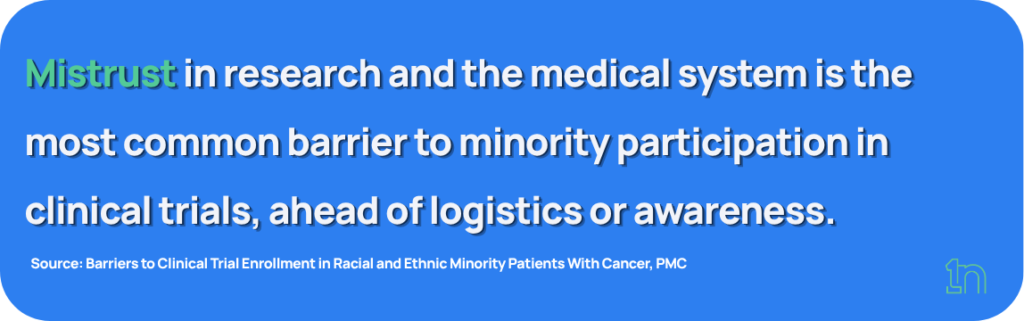
 Clinical trial diversity campaigns tend to lead with a number: people of color are underrepresented in research. That number is accurate and it will show up in most Awareness Month content this year. What gets less attention is the reason behind it. A systematic review of the barriers to minority enrollment in clinical trials found that mistrust in research and the medical system was the most common barrier to patients’ willingness to participate, ahead of logistics, awareness, or eligibility. Distrust is not a side effect of underrepresentation. It is a primary driver of it.
The distrust is documented, and it is reasonable

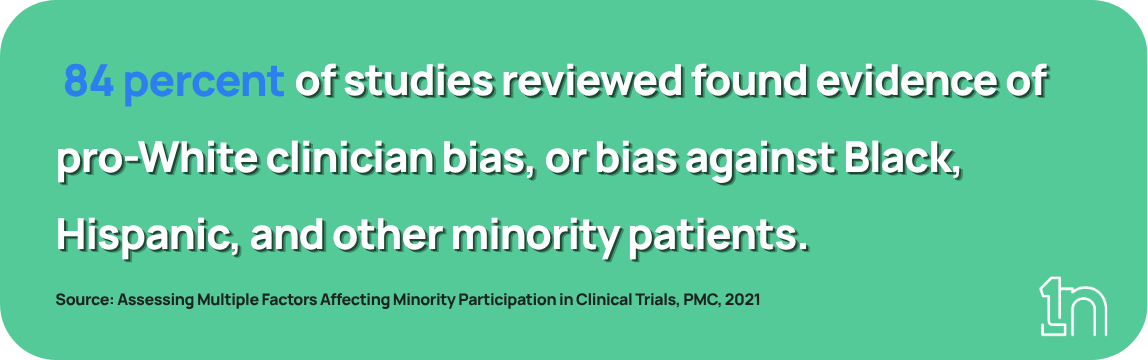
The starting point for most of this literature is historical. The Tuskegee syphilis study ran for 40 years, and the Black men enrolled in it were left untreated even after penicillin became the standard treatment for the disease. But treating that as a closed historical chapter understates the problem. A 2021 review found that 84 percent of studies reviewed established evidence of pro-White bias among clinicians, or bias against Black, Hispanic, and other minority patients, and that current experiences of perceived or real discrimination continue to reinforce mistrust in the African American community. A New York City study spanning African American, Latine, and Asian American participants found the same barrier reaching beyond any single group, with fear of adverse effects also cited as a barrier to participation, and perceived low risk of research as one of the few factors that increased willingness.
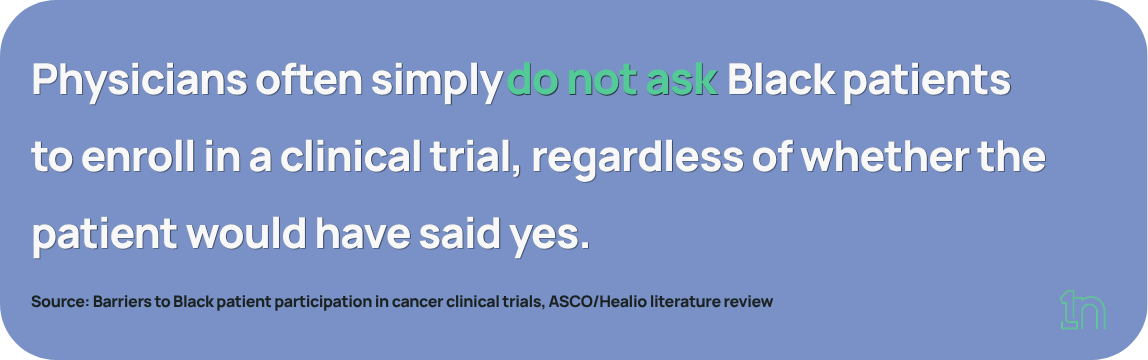
Distrust also shows up in a quieter form than refusal. Research on Black patient participation in cancer trials notes that mistrust is a major barrier, but often Black patients are simply not asked by their doctors to participate at all. A barrier this specific does not require a national awareness campaign to address. It requires a change in who gets the invitation.

Underrepresentation is real, and it is the effect, not the root cause

The resulting numbers are well known: people of color remain underrepresented across most therapeutic areas of clinical research, and that imbalance limits how well any given therapy is understood across the populations who will eventually use it. That much will be widely covered this month. The more useful question is what changes when distrust, not awareness, is treated as the thing to solve for.

What recruitment actually controls

Recruitment teams do not carry the weight of correcting decades of institutional harm. What recruitment does control is smaller, and it is exactly the set of actions the research points to as effective: transparency about what a study involves and why, working through community messengers instead of only academic medical centers, and following through on communication so a participant is never left wondering what happened to their data or their results.


Questions worth asking, before the next campaign goes live:

    1. Does the outreach explain what happens to a participant’s data, in plain language, before they are asked to enroll
    2. Is the study being introduced through a messenger the community already trusts, or only through a clinical site
    3. Are physicians and site staff extending the invitation to participate equally, or does the literature’s finding, that Black patients are often simply not asked, apply here too
    4. What does follow-through look like after enrollment closes, so participation does not feel transactional


The invitation matters as much as the science

Correcting decades of distrust will not happen in one study or one campaign. But every study either adds to that distrust or begins to repair it, and that outcome is decided by choices recruitment makes directly.
Connect with us today!