

A 2024 analysis of nearly 800 trials found that the harder a consent form was to read, the more patients dropped out. The decision to stay is often made long before randomization. Here is what that means for how studies recruit.

Most retention problems begin as recruitment problems. By the time a patient is randomized, much of their decision to stay is already set, shaped by the clarity of the screening conversation, the expectations someone established about visit burden, and whether the patient truly understood what they agreed to. 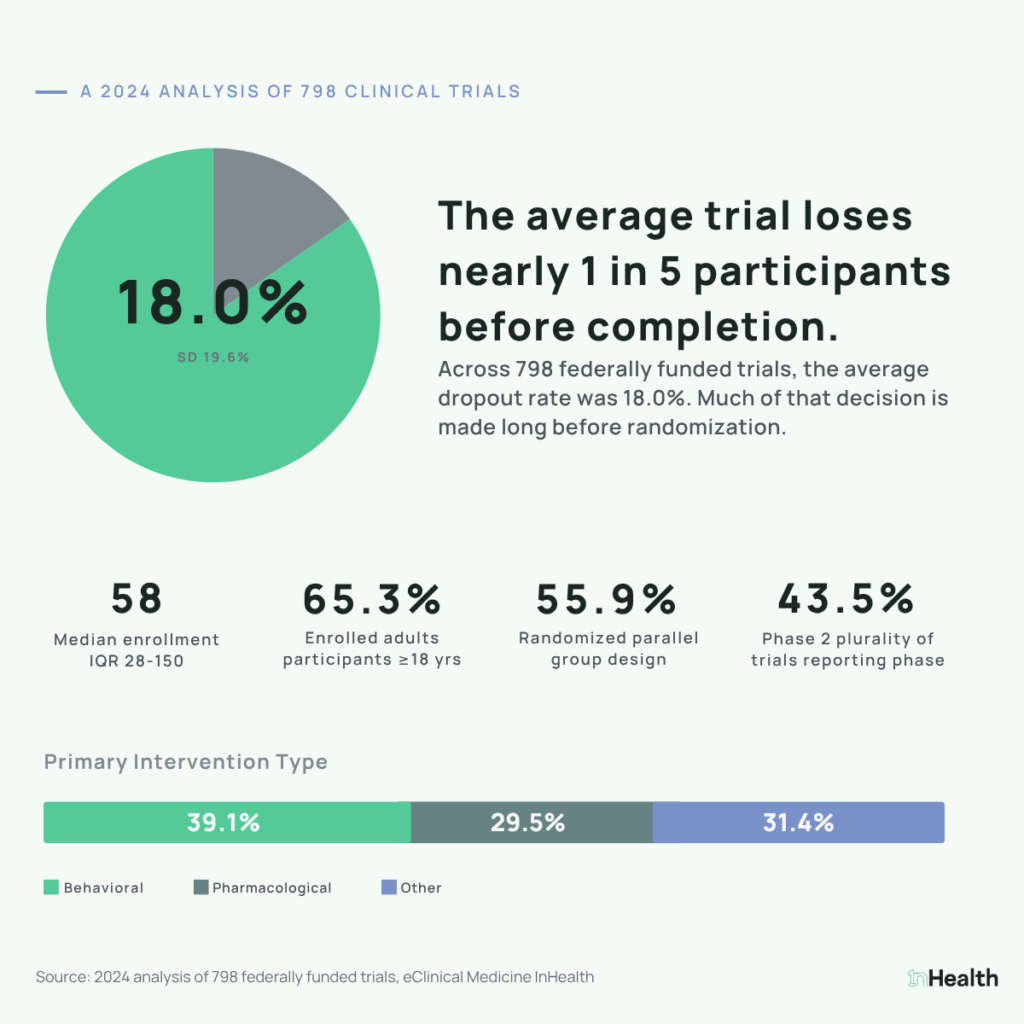 A 2024 analysis published in eClinicalMedicine examined nearly 800 federally funded clinical trials and found a clear pattern. The harder a consent form was to read, the more patients dropped out. The same analysis found that most consent forms are written above the reading level of the average American adult. The document meant to inform a patient often becomes the first sign that the study was not built with them in mind.
Sponsors frequently treat recruitment and retention as separate efforts, handed to separate teams and solved in sequence. That sequence carries a cost. A faster enrollment curve means little when the patients filling those slots never understood what they signed up for.
At 1nHealth, we treat clarity and fit as the foundation of retention rather than a later repair. When recruitment respects the patient from the first conversation, staying in the study becomes the natural result of work already done.
Connect with us today!
Get in Touch
Linkedin
Facebook
Instagram