Visit complexity is the primary enrollment challenge.
This is just one lesson we learned!
Download the full eBook to explore all the insights we gained from surveying hundreds of site staff and clinical researchers about the state of enrollment in 2026 and beyond.
Patient visit complexity is slowing enrollment
Sponsors often attribute enrollment delays to site execution issues or lack of patient motivation. However, insights from site staff tell a different story. A majority of respondents identify complex visit schedules as the primary obstacle to successful enrollment, frequently creating friction before recruitment efforts fully get underway.
Overly complex visit designs increase workload for site teams, complicate patient communication, and introduce uncertainty early in the study lifecycle. As a result, studies can stall before the first patient is screened, not because sites or patients are unwilling, but because the operational burden is too high.
Simplifying visit schedules removes one of the most significant sources of friction in enrollment. By reducing complexity at the protocol and visit-design level, sponsors can ease site burden, improve feasibility, and create the conditions for faster, more reliable enrollment from the outset.
The hidden enrollment challenge hiding in plain sight
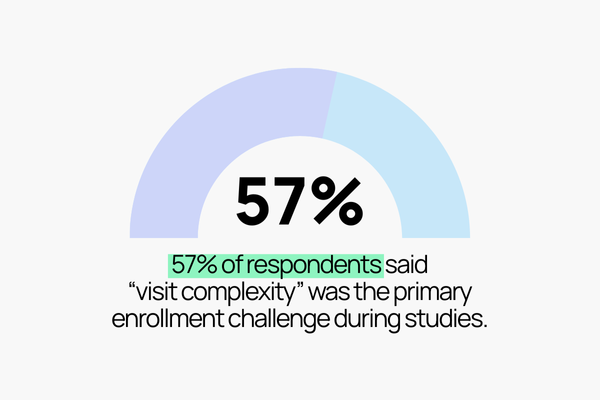
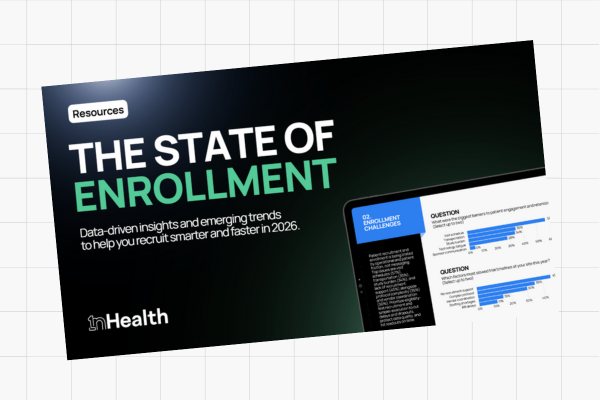
Sponsors often assume enrollment struggles stem from site performance or execution gaps. But feedback from the field tells a different story. According to our research, 57% of site staff say the most frequent enrollment challenge is managing overly complex visit schedules. When visits are difficult to explain, time-intensive to coordinate, or burdensome for patients, enrollment can stall before recruitment even begins.
Complex visit designs increase operational load on site teams, introduce uncertainty for patients, and create friction that no amount of motivation or monitoring can fully overcome. The result: slower startup, missed enrollment targets, and unnecessary strain on sites.
Simplifying visit schedules removes one of the highest-impact barriers to enrollment, making studies easier to run, easier to explain, and easier for patients to say yes to.
Download Now: The State of Enrollment (2026)
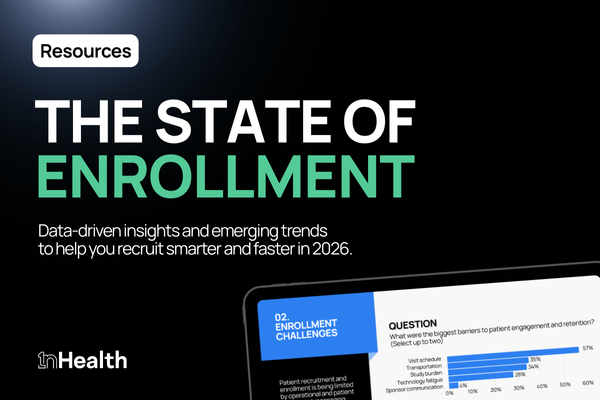
No assumptions. No recycled benchmarks. Just an unfiltered look at what’s working, what’s broken, and what study teams need to rethink to enroll with confidence in 2026.
Download the full report to explore all the insights we gained from surveying hundreds of site staff and clinical researchers.
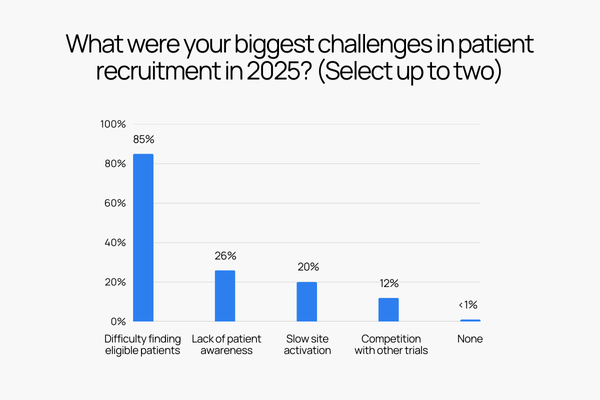
What were the biggest challenges in patient recruitment in 2025?
In 2025, the most significant recruitment challenge isn’t messaging or awareness—it’s precision access to the right patients. While outreach and engagement matter, they can only succeed once eligible participants are identified.
Our research shows that 85% of respondents cite difficulty finding qualified patients as one of their top two recruitment concerns. Enrollment delays increasingly stem from how quickly and efficiently studies can identify, verify, and reach the right participants—not from how well the study is marketed.
Why this matters for patient recruitment and study enrollment
When recruitment stalls, timelines slip, costs rise, and study teams are forced into reactive decisions that compound delays. If the core challenge is access to eligible patients rather than messaging, then investing primarily in outreach tactics misses the mark. Without precise and timely identification of qualified participants, even well-funded recruitment efforts struggle to gain traction.
As eligibility criteria grow more complex and competition for patients intensifies, the ability to efficiently find and reach the right participants becomes a defining differentiator. Studies that prioritize precision patient access reduce wasted effort, accelerate enrollment timelines, and give sites a meaningful head start. In today’s environment, recruitment success is less about volume and more about connecting with the right patients early.