There is a pattern that shows up in clinical trial enrollment with enough consistency to call it structural. A sponsor launches. The pre-launch projections go into the operating plan. Weeks pass, and the real-world data starts coming in.
The data does not match the projections.
Patients per site per month is lower than modeled. Screen failure is higher. Site activation is slower. The picture that emerges from actual performance is materially different from the picture that was approved in the planning phase.
And the projections stay in the deck anyway.
The attachment problem
Dan, CEO and founder of 1nHealth, framed it this way:
This is not a data problem. The data exists. In most cases it is being reviewed. The issue is what happens, or does not happen, when that data contradicts a plan that has already been approved, socialized, and built into timelines upstream.
Accepting the real-world numbers means reopening decisions. It means telling stakeholders that the basis for their approval was wrong. It means absorbing friction that most teams would rather defer.
So they defer it.
What deferred costs look like
The pivot does not disappear. It moves.
The teams closest to the data: CROs, recruitment partners, site coordinators, often see it coming. The structural problem is that the people who need to act on it are several layers removed, and the internal cost of raising the flag can feel higher than the cost of waiting.
It is not.
It just feels that way in the moment.
The real-world signal is the plan
Pre-launch projections serve a purpose. They are necessary for budgeting, site planning, and stakeholder alignment. But they are built on assumptions, and assumptions have a shelf life.
That shelf life ends the moment real enrollment data exists.
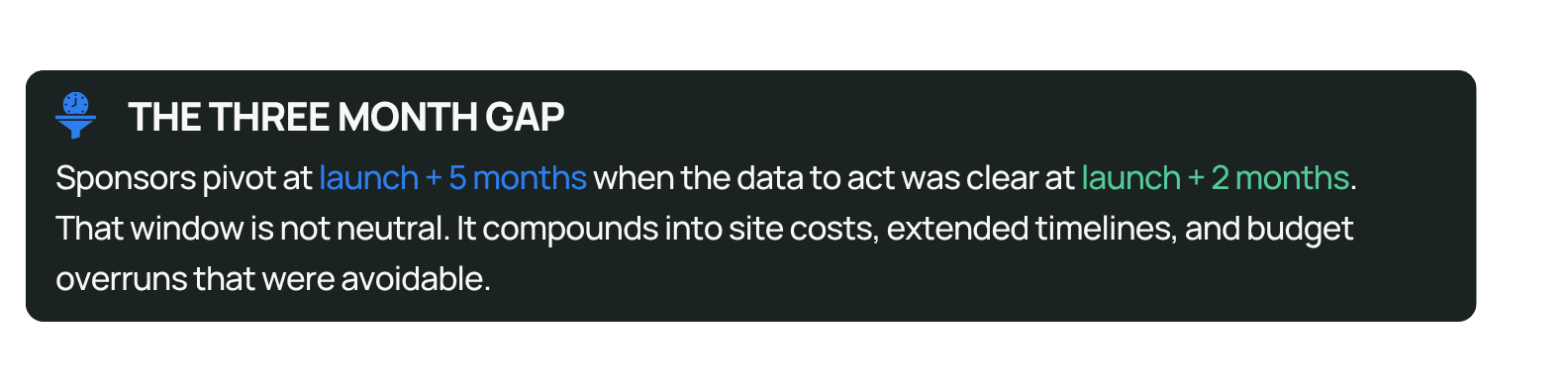
The sponsors who operationalize this, who treat early post-launch data as the authoritative source and rebuild their go-forward projections around it, are the ones who make decisions at launch plus two months instead of launch plus five.
What this means in practice
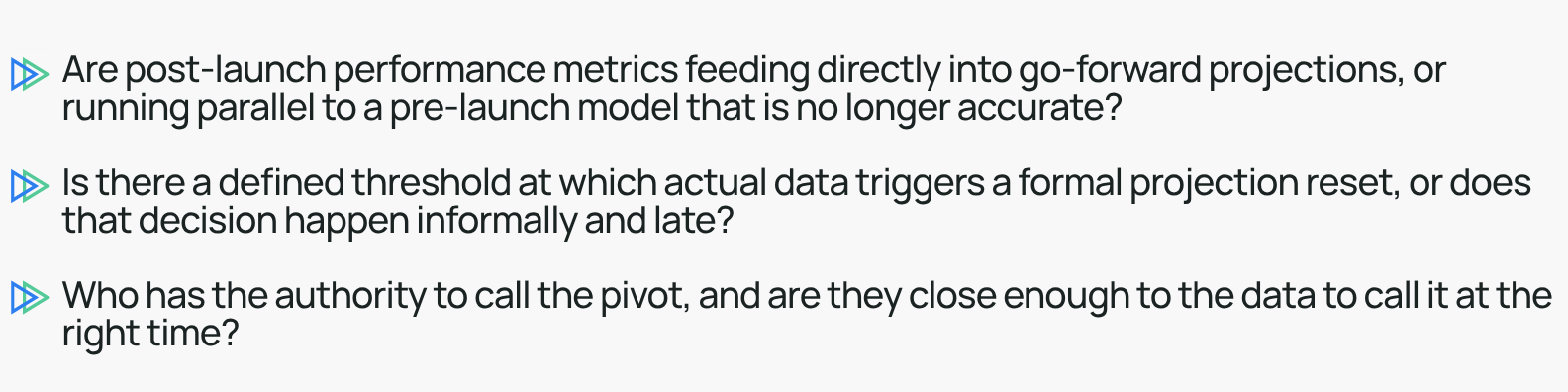
A few questions worth pressure-testing on any active enrollment program:
If the answers are unclear, the pre-launch projection is still running the program, and somewhere between launch plus two and launch plus five, that will show up in the numbers.